The Bridge
The Beginning
Challenges faced
Creating the solution
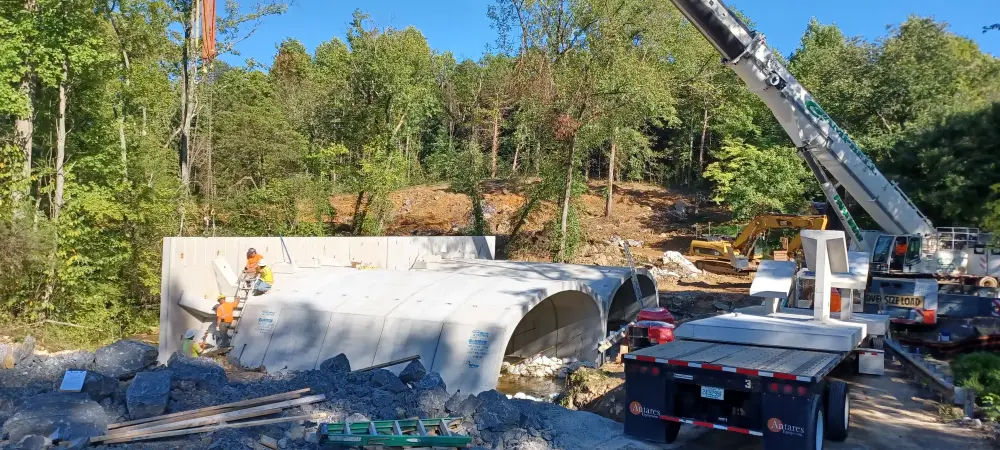
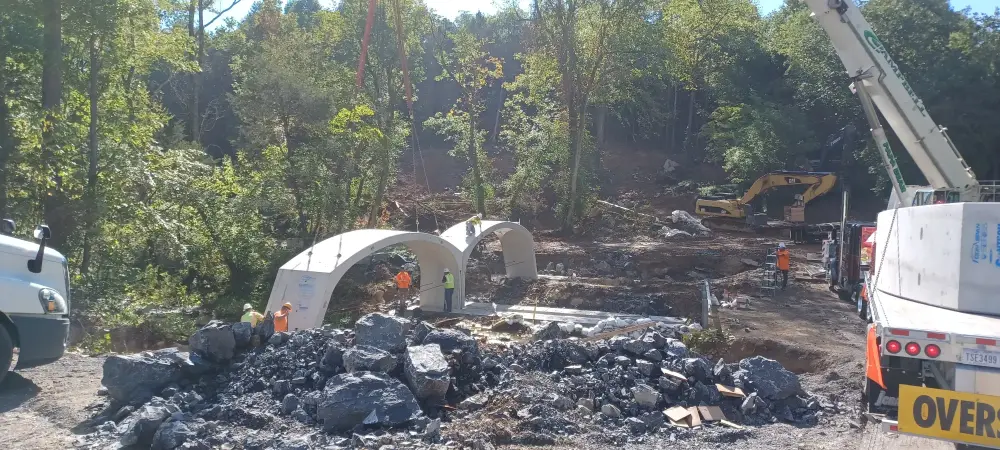
After weighing all of the challenges, a solution began to form. The crane to set the bridge sections wouldn’t fit between the county road and the bridge location due to overhead utility lines, so the crane pad needed to be located on the far side of the creek. This would leave just enough space for the oversize load trailers carrying in each bridge section to be off of the county road while being unloaded and each bridge section placed. Doing so increased the size of the crane required due to the extended reach across the creek to where the trailers would stage to unload. The new bridge would have to be constructed in 2 phases. Footers were dug and poured as close to the old farm bridge as possible to maintain access to other work taking place on the site.
A 300 ton crane was hired with a known risk of it having to cross an unrated farm bridge to reach the crane pad. Due to the length of the crane, the overload risk of the farm bridge was somewhat reduced because it was longer than the bridge. Since there was no room to stage more than one oversize load at a time, and each phase required dozens of loads staged in a specific order, an off site staging location was secured.
Execution
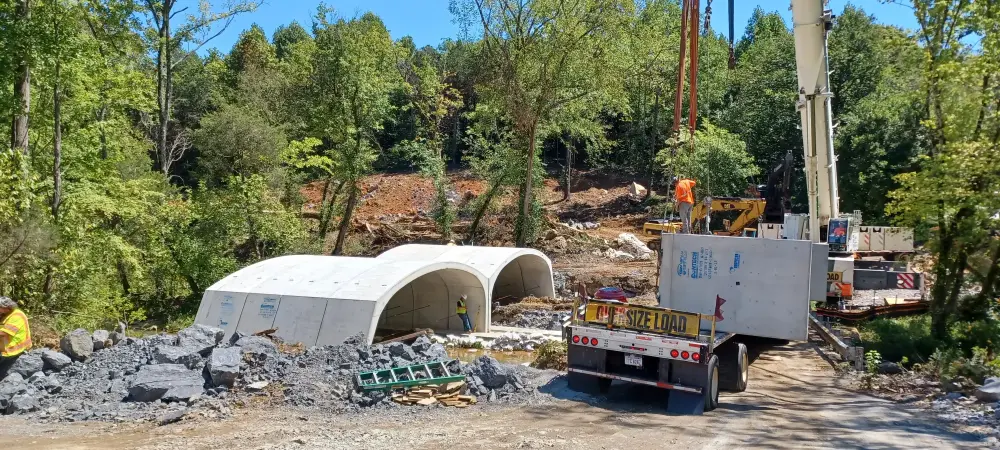
Phase 1 footers were constructed. Game day minus one arrived with the crane showing up on site while the oversize loads left the manufacturer several states away. The crane crossed the farm bridge and made it, without incident. The potential contingency of the bridge being compromised under the weight of the crane had been considered, but thankfully it remained intact. Carry on!
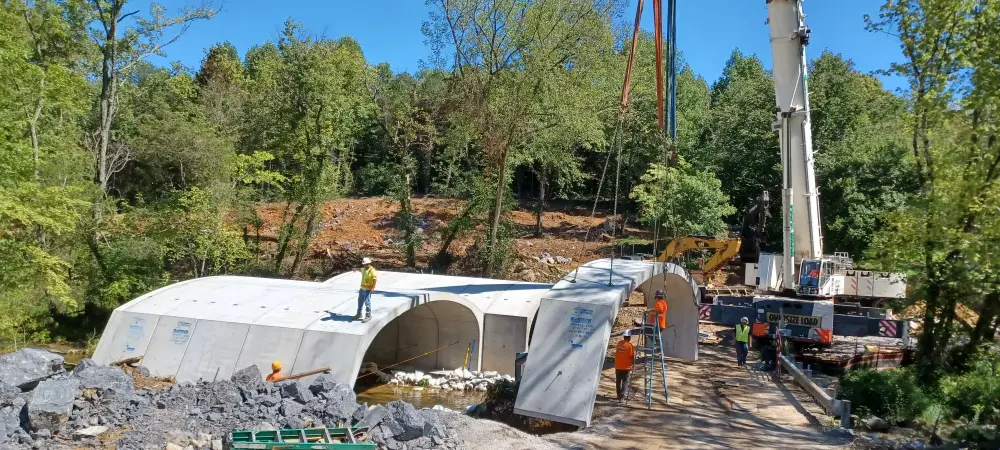
Game day begins with traffic control being set up on the county road and oversize loads being staged at the staging area in the order that each piece needs to be set in place. One by one they begin arriving on site. Drive one in (no room to maneuver a tractor trailer into the site by backing in), unload it, back it out, send it out on a different route from the next load coming in because the county road was too narrow, and repeat until Phase 1 is built that afternoon. Next day, roll in the dump trucks to begin backfilling in order to create a new access route into the site..
Once the first half of the bridge is open enough to allow construction traffic, the old farm bridge is demolished to make way for Phase 2. Phase 2 begins, but brings a new challenge. The ready-mix concrete supplier took on too much work and now can’t supply trucks to keep up with the footer pour schedule. This required a rushed need to find a new supplier on short notice, resubmit mix designs to the geotech inspector, get approvals, and get back to work. Done, carry on! Phase 2 continues similar to Phase 1.
Conclusion
Every project brings it’s own challenges. Deliberate planning, along with reviewing as many contingencies ahead of time helps to overcome many of these challenges. However, very few plans survive first contact. Being prepared to adjust while navigating these challenges is key to success.